English
 中文
中文 Pусский
 Español
Energy Saving Strategies for Extrusion Laminating Lines Without Sacrificing Speed
You’re running an extrusion laminating line, and the electricity bill is a constant reminder of how much energy this equipment consumes. Extrusion coating and laminating is one of the most energy-intensive processes in flexible packaging—heat, motors, and compressed air all add up fast.
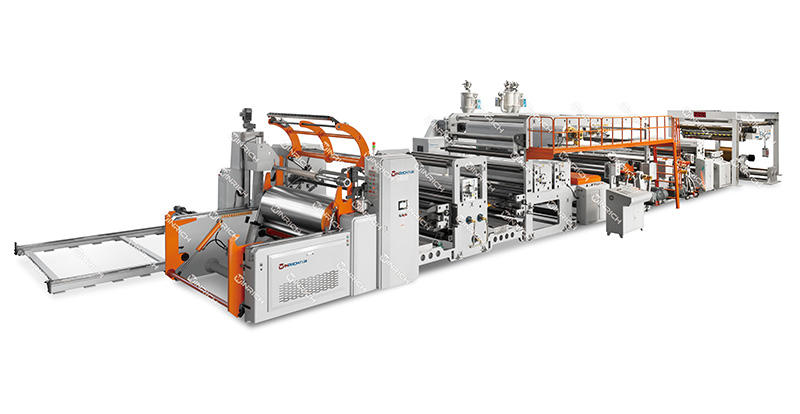
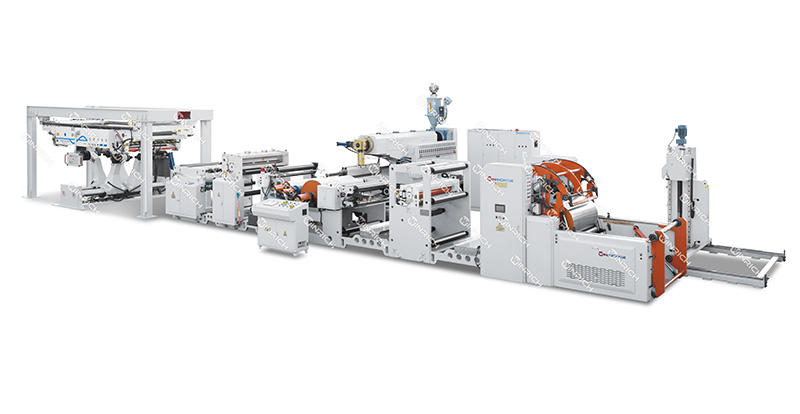
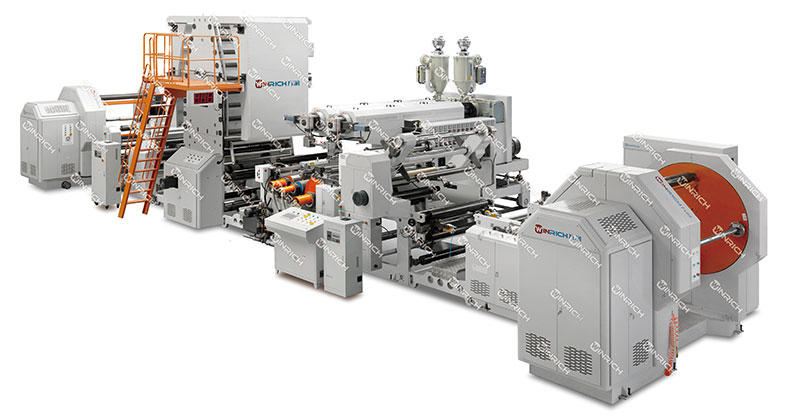
The SJFM Extrusion Lamination Machine from Yilian Machinery operates at 100-150 m/min with power ratings from 60kW to 130kW, depending on the model. But high energy consumption isn’t a fixed cost. With targeted improvements, you can cut electricity costs by 15-25% without sacrificing speed or quality.
This guide breaks down energy-saving strategies across three carriers—thermal, electrical, and pneumatic—plus operational changes that cost nothing to implement. For plant operations managers and energy leads, this is a practical playbook for lowering the cost per ton on your laminating line.
Thermal Energy – Insulate and Optimize
Heat is the biggest energy consumer on an extrusion laminating line. Keeping it where it belongs—in the barrel and die—is the first step to saving power.
Barrel and Die Insulation
A significant amount of heat escapes from uninsulated extruder barrels and die bodies. This wasted heat means your heaters run longer and work harder. Installing ceramic insulation blankets around the barrel and die can reduce the heater duty cycle by up to 30%. The result is lower electricity consumption and more stable melt temperatures.
Don’t Overheat
Every degree above the minimum required melt temperature wastes energy. The T-type die head on the SJFM series is designed for consistent extrusion, but the temperature setpoint is still operator-controlled. Run a trial—reduce the setpoint in 5°C increments until you see quality issues, then back up 5°C. That’s your optimal temperature.
Maintain Heating Bands
Poor contact between heating bands and the barrel reduces heat transfer efficiency. The heater runs longer to achieve the same temperature, wasting power. Check heating band tightness during maintenance. Loose bands should be replaced or re-seated immediately.
Electrical Energy – Motors, Drives, and Fans
Motors are the second-largest energy consumer on the line. Optimizing how they run saves power without affecting output.
VFD at Optimal Speed
The main extruder motor should be running with a variable frequency drive (VFD) at the optimal speed for the current job. Running at full speed with a damper or mechanical restriction is inefficient. The SJFM series features automatic tension control and line speed adjustment as part of its PLC-controlled system, making it easier to optimize motor speed for each run. If your VFD isn’t being used to its full potential, you’re wasting energy.
Servo-Driven Unwinds
Traditional unwinds use clutch-brake systems that waste energy as heat. Servo-driven unwinds only draw power when they’re actively pulling, reducing electrical consumption. The SJFM series uses a double-station unwinding and rewinding system with automatic and non-stop roll exchange, and servo drives are a natural fit for this configuration.
Turn Off Cooling Fans
Cooling fans on the extruder barrel and control cabinet don’t need to run continuously. Install temperature sensors that switch fans on only when needed. This is a low-cost retrofit with a fast payback. The SJFM’s PLC system can be programmed to control fan operation based on actual temperature readings.
Pneumatic Energy – Stop the Leaks
Compressed air is the hidden energy consumer on most laminating lines. It’s expensive to produce, and leaks are common.
The Leak Problem
Cylinder fittings, air nozzles, and hose connections all develop leaks over time. A single 1mm leak at 8 bar costs roughly 100W of continuous power. On a line with multiple pneumatic components, leaks can add up to significant waste.
Reduce System Pressure
Every bar of pressure reduction saves about 7% of compressor energy. If your system runs at 8 bar, dropping to 6 bar saves roughly 20% of air consumption—with no impact on cylinder performance in most cases. The SJFM’s high pressure blower for scrap edge suction may need full pressure, but the rest of the pneumatic system can often run at lower pressure.
Listen and Fix
Walk the line with a listening wand or ultrasonic leak detector once a month. Mark and repair leaks immediately. This is a zero-capital, high-return activity that most plants neglect.
Operational Strategies That Cost Nothing
Not all savings require investment. Some of the biggest gains come from changing how you schedule and operate.
Group Similar Orders
Every time you change materials or products, the extruder cools down and reheats. That heating cycle consumes energy without producing any output. Group orders with similar temperature requirements to minimize heating and cooling cycles. The SJFM’s PLC one-touch centralized control makes recipe changes faster, but grouping orders still reduces the number of changeovers.
Schedule Heater Maintenance
Heating bands that have poor contact with the barrel waste power. Schedule regular inspection of heating band tightness and contact as part of your maintenance routine. The SJFM series features advanced temperature control, but even the best control system can’t compensate for poor heat transfer.
Train Operators on Energy Awareness
Operators who understand energy costs make better decisions. Show them the kWh/ton reading and explain how their choices—speed, temperature settings, idle time—affect it. When operators know the cost, they act differently. The SJFM’s PLC human-machine interface provides real-time data that can be used for operator training and performance tracking.
Measure, Track, and Improve
You can’t manage what you don’t measure. Tracking energy consumption per ton of output is the foundation of any energy-saving program.
Simple Energy Log
Record the kWh consumption for each shift and divide by the tons of output. This gives you a baseline—and a way to measure improvement. The SJFM series features meter counting, making it easy to track production volume alongside energy data.
Set Improvement Targets
Once you have a baseline, set a target for reduction. A 5% improvement in the first quarter is realistic with the operational strategies above. The SJFM’s PLC control system can be used to monitor energy consumption in real-time, helping you track progress against targets.
Track ROI
Insulation blankets typically pay back in less than six months. VFD optimization pays back in 12-18 months. Document the savings to justify further investment. Yilian Machinery’s equipment is built for long-term reliability, and the energy savings from these retrofits extend the value of your investment.
| Energy Carrier | Strategy | Estimated Saving | Investment Level |
|---|---|---|---|
| Thermal | Barrel insulation | 30% heater duty cycle reduction | Low |
| Thermal | Optimized melt temperature | 5-10% of heating energy | Zero |
| Electrical | VFD optimization | 10-20% of motor energy | Low to Medium |
| Electrical | Fan control | 5-10% of cooling energy | Low |
| Pneumatic | Leak repair | 15-30% of compressed air | Zero to Low |
| Pneumatic | Pressure reduction (8 bar to 6 bar) | ~20% of air consumption | Zero |
| Operational | Group similar orders | Reduced heating cycles | Zero |
| Operational | Heater maintenance | 5-10% of heating energy | Zero |
Questions Operations Managers Ask
Does running at half speed save half the energy?
No. Fixed losses—heater energy, motor standby power, control system power—remain constant regardless of speed. The SJFM series runs at 100-150 m/min; running slower reduces throughput without proportionally reducing energy consumption. The most energy-efficient approach is to run at optimal speed for the job and avoid prolonged idling.
Can I use a smaller extruder for thin coatings?
Yes—and it’s a significant energy saver. If you’re consistently applying thin coatings, a smaller extruder with lower power consumption is more efficient than running a large extruder at low output. The SJFM series is available with different screw diameters from Φ80mm to Φ140mm, so you can match the extruder size to your coating requirements.
How do I convince management to invest in VFD optimization?
Start with a simple energy audit. Measure the current consumption of each motor. Estimate the savings from VFD optimization based on actual run time and load. Use the simple payback calculation: if the VFD costs XandsavesXandsavesY per month, the payback period is X/Y months. Most VFD retrofits pay back in less than two years. The SJFM’s automatic tension control and line speed adjustment already support VFD integration, making the retrofit simpler than on older machines.
Creating an Energy-Smart Laminating Line
Energy efficiency on an extrusion laminating line isn’t a single project—it’s an ongoing process of measurement, improvement, and verification.
Start with the Baseline
Measure your current kWh/ton. You can’t improve what you haven’t measured. The SJFM series features meter counting and a PLC human-machine interface that make data collection straightforward.
Implement the Zero-Cost Strategies First
Group orders, optimize temperatures, fix air leaks, and train operators. These steps cost nothing and deliver immediate savings.
Plan the Low-Cost Retrofits
Barrel insulation, VFD optimization, and fan controls are low-cost investments with fast paybacks. The SJFM’s double-station unwinding and rewinding system and advanced control systems provide a solid foundation for these retrofits.
Monitor and Adjust
Track your kWh/ton weekly. When it increases, investigate. When it decreases, document what changed. Share the results with your team.
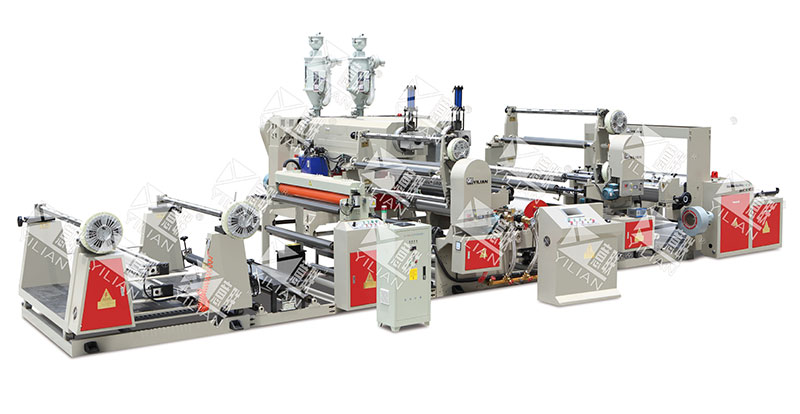
Yilian Machinery manufactures the SJFM series of environmentally friendly extrusion laminating machines, designed for high-speed operation at 100-150 m/min. The SJFM 1100-2000B High Speed Extrusion Film Lamination Machine features double-station unwinding and rewinding for non-stop roll exchange, PLC one-touch centralized control with an advanced touch screen system, high-efficiency corona treatment for enhanced peel strength, and a T-type die head for consistent extrusion. With power ratings from 60kW to 130kW and widths up to 2000mm, the SJFM series is built for high-volume flexible packaging production. Yilian Machinery provides comprehensive service and technical support to help you maintain optimal performance and efficiency.
Energy savings on an extrusion laminating line don’t require sacrificing speed. With the right strategies—thermal insulation, VFD optimization, air leak repair, and operational improvements—you can cut energy costs by 15-25% while maintaining your current output. The SJFM series from Yilian Machinery provides the control and automation features you need to implement these strategies effectively.
Ready to cut energy costs on your extrusion laminating line? Reach out to Yilian Machinery’s technical team—they can provide energy audit guidance, retrofitting recommendations, and machine specifications to help you improve efficiency.